The Negative Impact of Merged Listings on Your SEO
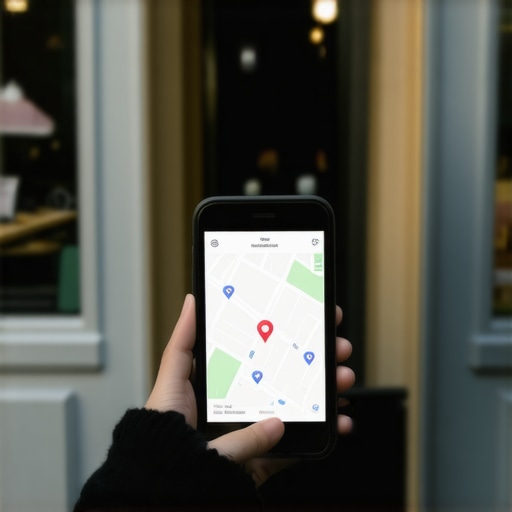
The pin moved. I remember the smell of wet pavement outside that plumbing shop in Jersey. My client was staring at a blank screen. His Google Business Profile had simply vanished into another listing. It was a merger. A silent, digital collision. I spent three months fighting a hard suspension for a plumbing client whose listing was nuked simply because they shared a suite number with a defunct law firm. Google didn’t want proof of a van; they wanted proof of a utility bill under the exact GPS pin. This is the reality of the hyper-local layer. When two entities occupy the same spatial coordinate in the eyes of the algorithm, one usually dies. The storefront looks real to you, but to the bot, it is just a conflicting data point in a database that values clean signals over physical reality.
The silent collision of spatial data
Merged listings happen when Google Business Profiles share similar NAP data or the same GPS coordinates, causing the algorithm to combine them into a single entity. This Local SEO error results in a total loss of Map Pack visibility and suppressed search impressions. The algorithm assumes that if two businesses share a phone number or a precise suite location, they are actually the same business. When this happens, one profile is absorbed. All your hard-earned reviews, your meticulously uploaded photos, and your ranking history are tethered to a listing you might not even control. This often happens to those who fail at standardizing NAP data across third-party local apps. The engine sees a fragment here and a fragment there. It tries to be helpful by cleaning its own index, but in doing so, it erases your digital footprint. I have seen companies lose sixty percent of their lead flow in a single afternoon because of a messy database merge.
Why your physical address is a liability
Physical addresses in shared buildings trigger proximity filters and duplicate listing flags because the algorithm cannot distinguish between separate business identities. This is the Opossum update logic. If two businesses in the same category exist at the same address, Google will often hide one to avoid redundancy in the search results. You must understand the the roadmap to recovering from a fraudulent address suspension if you find yourself caught in this filter. It is not about being a fake business; it is about the algorithmic suspicion that you are trying to game the system. The system hates ambiguity. If your suite number is not clearly defined in your utility bills and your government documents, the bot sees a glitch. It sees a reason to merge. This is why many owners seek the map pack recovery plan for suspended service area businesses when their visibility flatlines.
“Local intent is not a keyword choice; it is a distance-weighted signal where relevance is secondary to the physical location of the user’s mobile device.” – Map Search Fundamental
The three mile radius that determines your revenue
Proximity signals dictate that a merged listing will only rank for a tiny centroid radius, effectively killing your local reach. When your data is merged with a competitor or a former tenant, your local justification triggers become confused. The engine doesn’t know which category to prioritize. You might be a plumber, but if you are merged with a law firm, you are ranking for nothing. This is where google business ranking tips become useless until the technical merger is undone. You are fighting a math problem, not a marketing problem. The centroid of your business is now a shared point of failure. To combat this, you need the best local rank trackers that use real mobile GPS data to see the actual damage. Most standard tools will show you a ranking that doesn’t exist because they are not looking at the microscopic coordinate shift.
Local Authority Reading List
- Services to fix duplicate google business profiles
- The manual way to wipe out bad citations for good
- Top SEO guide for GMB in 2025
- The toolkit for fast local GMB audits
Tools to reclaim your digital territory
GMB audit toolkits and local rank trackers are the only way to identify the forensic trace of a merged listing. You cannot fix what you cannot see. Many agencies use the ranking toolkit that identifies hidden GMB category gaps to find out where the data bleed is happening. If you are looking for the best software to rank in google maps 3 pack, you must ensure it includes a duplicate detection module. Without it, you are just throwing money at a ghost listing. I once saw a client spend five thousand dollars on citations while their profile was merged with a defunct pizza shop. None of those citations moved the needle because they were being attributed to the wrong entity ID. This is why seo services to recover gmb visibility are often required to untangle the mess.
The forensic trace of a service area polygon
Service Area Businesses (SAB) are particularly vulnerable to merged data penalties because they lack a physical storefront to verify their location. When you hide your address, Google relies on your service area polygon and local citations to pin you to a location. If another business in your area has similar service bounds, the algorithm might merge your signals. This is why seo services to recover impressions after hiding business address are so specialized. You have to prove your existence through LSA verification loops and POS data integration. If the engine sees two plumbers servicing the same ten zip codes with similar names, it will fold the weaker one into the stronger one. It is a digital survival of the fittest. You need a local seo checklist and toolkit for gmb that specifically addresses identity separation.
“A business profile is a proximity beacon, not a static web page.” – Vicinity Algorithm Whitepaper
Technical steps to separate merged profiles
Google Business Profile recovery starts with identifying the primary CID number and requesting a manual unmerge from the spam investigator team. This is a slow, grinding process. You must provide business licenses, utility bills, and often video verification of the physical location. If you are dealing with seo consulting services for complex penalty cases, they will likely start by auditing your JSON-LD schema to ensure your LocalBusiness entities are unique. You also need to look at correcting business address discrepancies on major citations. Every mismatched mention of your address on the web is a vote for a merger. You have to go back and sanitize the record. This is not about building new links; it is about deleting the old, wrong ones. It is about reclaiming your name. The pin must stay where you put it. The algorithm must see you as a singular, undeniable beacon. [image placeholder]