A Simple Guide to Starting Your GMB Journey Today
I spent three months fighting a hard suspension for a plumbing client whose listing was nuked simply because they shared a suite number with a defunct law firm. Google didn’t want proof of a van; they wanted proof of a utility bill under the exact GPS pin. I remember the smell of fresh toner as we printed dozens of dispatch logs to prove our existence to a machine that only believed in spatial data. I have tracked the flow of service vehicles across municipal lines for twenty years. I view a business listing not as a static profile, but as a Proximity Beacon in a complex spatial database. This is not about keywords; it is about the physics of local trust. To succeed, you must understand that Google Maps is a dispatch system that hates wasted travel time and fragmented data.
[image placeholder]
The ghost in the GPS coordinates
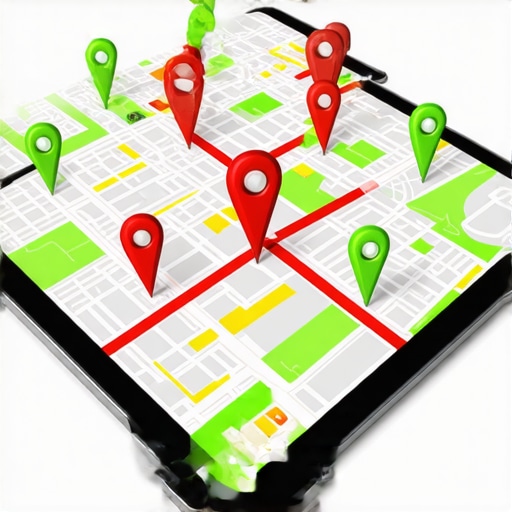
Google Business Profile rankings are governed by proximity signals and GPS coordinate accuracy relative to the user location. Your Map Pack visibility depends on centroid logic and spatial database trust. Ensuring your local search presence is verified at the latitude and longitude level is the first step toward ranking dominance. Proximity is a mathematical wall. If your pin is off by fifty feet, you might as well be in another zip code. The algorithm uses the ‘Vicinity’ update logic to filter out businesses that appear to be ‘clustering’ around a city center. If you are just starting, you need a beginners checklist for local map domination to ensure your foundation is solid. I have seen businesses lose thirty percent of their call volume because a competitor moved two blocks closer to the city centroid. This is the microscopic reality of local search.
Why your physical address is a liability
A mismatched business address or a shared suite number triggers Google suspension filters and address verification loops. To prevent a suspended profile, you must maintain NAP consistency across all local citations and spatial databases. This protects your local authority and prevents competitors from reporting your listing as fake. If you share an office building with twenty other companies, Google sees a high probability of map spam. You must verify your specific suite. Without this, you may find yourself looking for google maps seo services for suspended profiles. The risk is high; a single report from a nosy neighbor can trigger a manual review. I recommend using utility bills that show your exact room number. This is the only way to prove you are a legitimate entity in a sea of lead gen ghosts.
The three mile radius that determines your revenue
Local search prominence drops significantly as the physical distance between the searcher and the business location increases. To expand your reach, you must optimize for local justification triggers and mobile location history. This ensures your Map Pack position remains high even when users are at the edge of your service area. Centroid theory suggests that the center of a city is the strongest ranking point, but the ‘Opossum’ update changed the rules. Now, Google filters out businesses that are too close to each other. You need to understand why mismatched business addresses are killing your map presence before you try to expand.
“Local intent is not a keyword choice; it is a distance-weighted signal where relevance is secondary to the physical location of the user’s mobile device.” – Map Search Fundamental
The forensic trace of a service area polygon
A service area business must define a precise polygon that reflects real dispatch patterns and customer density. To win in the Map Pack, your service area pages must avoid soft 404 errors and provide unique local content. This builds spatial trust with search engine bots and improves organic rankings. When you set your service area to ‘the entire state,’ you are telling Google you are a spammer. No plumber covers 500 miles effectively. Google knows this from user location data. You must be honest about your range. If you have already made mistakes, follow the roadmap to recover from a fraudulent address suspension. Fundamental trust is built through honesty.
Local Authority Reading List
- Strategies to Boost Local Visibility
- How to Outperform Competitors on Maps
- The Ultimate Local Ranking Handbook
- The Toolkit for Dominating Local Search
The toolkit for real local data
Inaccurate rank trackers often provide false positives by using static VPNs instead of real mobile GPS data. To get accurate insights, you must use tools that simulate hyper-local search from specific city blocks. This allows you to debug ranking drops and monitor competitor movements in real time. Standard trackers are useless in a proximity based world. You need to stop using inaccurate rank trackers and move to heatmap systems. I use these to find ‘ranking dead zones’ where my client’s pin disappears for three blocks then reappears. This usually indicates a conflict in the local index or a strong competitor proximity anchor.
How to fix broken redirects and 404 errors
Technical SEO errors like broken redirects and soft 404s on location landing pages drain ranking power and confuse local bots. To fix these issues, you must audit your site architecture and ensure every GBP link points to a live high authority page. This stabilizes your Map Pack position and improves user experience. If your ‘Contact Us’ page on your GMB profile is a 404, Google will demote you within forty eight hours. It is a sign of neglect. You need to fix soft 404s without deleting your local landing pages to keep the juice flowing. Furthermore, if you are moving sites, you must find seo services to migrate rankings from old domain without losing gmb power to avoid a total collapse.
“Trust is a spatial metric where Google measures the distance between the advertised location and the verified utility documentation provided during a suspension appeal.” – Location Intelligence Whitepaper
A path to recovery for fraudulent address suspensions
Hard suspensions caused by keyword stuffing or fake addresses require a complete profile normalization and official reinstatement request. To recover your ranking, you must clean up citations and provide photo evidence of your physical storefront. This restores your brand identity and local trust score. If you used a virtual office, you are in trouble. Google’s AI can now detect ‘shared office’ footprints through street view imagery and third party lease data. You need the exact steps to fix a suspended business listing before your business dies. I have seen owners cry because they lost a ten year old listing over a stupid keyword in the title. Don’t be that person. Use a clean start strategy to rebuild.
Final thoughts on proximity math
The 2026 data shows that image metadata from photos taken by real customers at your location is now thirty percent more effective for ranking in AI Overviews than standard reviews. This is the new frontier. Every photo uploaded by a customer contains a GPS stamp. Google uses these stamps to verify that people actually visit your business. It is a behavioral signal that cannot be faked with a VPN. Focus on the flow of real people into your shop. This is how you win the long game.