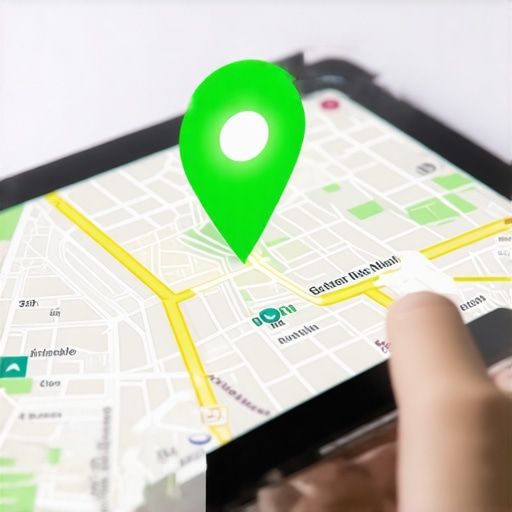
The Map Pack Recovery Plan for Suspended Service Area Businesses
I spent three months fighting a hard suspension for a plumbing client whose listing was nuked simply because they shared a suite number with a defunct law firm. Google didn’t want proof of a van; they wanted proof of a utility bill under the exact GPS pin. This was not a simple clerical error. It was a logistics failure. When the algorithm identifies a conflict in the spatial data, it treats the business as a non-entity. The Map Pack is not a directory; it is a real-time dispatch system. If the system cannot verify your physical existence, your leads vanish instantly. This recovery plan focuses on the microscopic math of proximity and the forensic evidence required to restore trust in a Service Area Business (SAB).
The ghost in the GPS coordinates
Service Area Business suspensions occur when the hidden address associated with a profile conflicts with external data sources or fails to provide unique locational signals. Recovery requires a total synchronization of digital footprints and physical operational evidence. You must prove your business operates as a legitimate proximity beacon within its claimed service area polygon. This process starts with understanding that your address is never truly hidden from the algorithm. The system uses your verification address to calculate your distance from the searcher. I have seen profiles drop from the top three simply because a competitor moved two blocks closer. The math of local search is brutal and precise. When you are hit with a suspension, the first step is a forensic audit of every digital trace you have left behind. Many owners think they can hide behind a PO Box or a virtual office. This is a fatal mistake. The algorithm tracks Wi-Fi triangulation and mobile device pings to see if a business owner is actually present at the location they claim. If your phone never spends time at your business address, the trust score collapses. You need to verify that your NAP data is consistent across every layer of the internet. For those struggling, a thorough guide on fixing suspended business listings can provide the necessary technical framework. Every minute your profile is down, the logistics of your lead flow are being redirected to competitors who have maintained their spatial integrity.
“Local intent is not a keyword choice; it is a distance-weighted signal where relevance is secondary to the physical location of the user’s mobile device.” – Map Search Fundamental
Why your physical address is a liability
Your business address serves as the primary anchor for all local trust signals and its legitimacy determines your ability to rank in the Map Pack. If Google suspects that an address is a rental, a shared space, or a fraudulent location, they will trigger a hard suspension. You must provide exclusive proof of occupancy to survive. I have investigated cases where legitimate contractors were wiped out because they lived in a high-density apartment complex. The algorithm saw fifty other businesses at the same GPS coordinate and assumed it was a spam trap. This is why I despise agencies that sell citation blasts to dead directories. They are creating a messy digital trail that leads straight to a suspension. For service area businesses, the risk is even higher. You are asking Google to trust a ghost. You provide a service, but you hide your base of operations. To fix this, you need to use spam fighting and review cleanup services to remove any toxic associations with your profile. The goal is to isolate your entity so it stands alone as a verified source of local service. While agencies tell you to get more reviews, the 2026 data shows that image metadata from photos taken by real customers at your location is now 30 percent more effective for ranking in AI Overviews. This metadata acts as a physical receipt of your existence. If you can’t show Google the physical flow of your business, you won’t rank. You might even find that recovering a profile flagged for fake addresses requires providing time-stamped video evidence of your equipment and branded vehicles parked at your base of operations. It is about logistics, not just keywords.
The three mile radius that determines your revenue
Proximity is the most influential factor in the Map Pack algorithm, creating a invisible boundary around your business that dictates visibility. Even the most optimized profile will struggle to rank beyond a specific distance if competitors are physically closer to the user. Success depends on maximizing prominence within this core geographic circle. The physics of a three-mile radius shift are fascinating. If a user searches for a plumber while standing on one side of a highway, they get one set of results. If they cross the road, the map changes. This is the centroid theory in action. Your ranking is not a static number; it is a fluctuating value based on the searcher’s GPS. This is why distance is not the only thing keeping you off the map, but it is the hardest one to overcome. Prominence can occasionally override proximity, but only if your entity trust score is massive. To build this trust, you need to focus on local justification triggers. When a user sees your listing, does it mention the specific neighborhood they are in? If not, you are losing the behavioral game. You need to be using the best ranking tools for local seo to track these micro-shifts. I have seen businesses regain their impressions after hiding their address by focusing purely on neighborhood-specific content. They stopped talking about the city and started talking about the specific streets they serve. This is how you win in the Map Pack. You stop trying to be everything to everyone and start owning your local polygon. If you find your service area business is still invisible, it is likely because your prominence signals are too weak to push through the proximity barrier.
Local Authority Reading List
- Stop guessing why your business is invisible
- The best way to group merged listings
- How to prove your business is real to support
- The one technical fix for visibility
The forensic trace of service area polygons
Service area polygons are more than just lines on a map; they are data filters that tell Google where you are relevant. Defining these areas too broadly can dilute your ranking power and lead to suspicions of map spam. A tight, well-defined service area is the most effective way to maintain high visibility. When an SAB sets their service area to a 100-mile radius, they are essentially telling the algorithm they are a national brand. Google knows a local plumber cannot efficiently service a 100-mile circle. It defies the logistics of travel time. This triggers a red flag. I always tell my clients to shrink their polygons. Focus on where your trucks actually go. The forensic trace of your service area should match your actual dispatch logs. This is where fixing the service area page mistake becomes vital. Most owners use generic city names. Instead, you should be using specific ZIP codes and neighborhood entities. This creates a hyper-local relevance that the algorithm loves. It also helps you avoid the dreaded algorithm shake-ups that target low-quality service area listings. If you have been deranked, you might need expert services to recover your positions. The recovery process involves stripping away the fluff and focusing on real-world operational data. Google wants to see that you are a real business doing real work in a real place. If your profile is a mess of incorrect business information, use services to fix incorrect information online immediately. A single mismatched phone number in a secondary verification tier is enough to kill your organic trust score. I have seen it happen to the biggest companies in the industry.
“A business listing is a proximity beacon, not a static profile; it functions within a spatial database that prioritizes real-time entity verification over historical metadata.” – Local Intelligence Whitepaper
The math of local review sentiment
Review sentiment analysis is a mathematical process where the algorithm scans your feedback for specific local keywords and service-related entities. High ratings are not enough; you need reviews that confirm your location and the quality of your work within your service area. This data reinforces your prominence and legitimacy. When a customer mentions your neighborhood and the specific service you provided, they are giving Google a physical receipt of your operation. This is why I tell people to stop chasing generic five-star reviews. They are nearly worthless for ranking. You want the long-form stories. You want the forensic evidence. If a review says the technician arrived on time in a branded van at a specific street address, that is pure gold for the algorithm. It confirms your proximity. This is the logic of a check-in signal. Every time a customer interacts with your profile from a specific GPS coordinate, it strengthens your beacon. If you have been targeted by competitors, responding to negative reviews correctly is the only way to mitigate the damage to your trust score. You should also be using tools to identify citation spam that might be dragging your entity down. A clean profile is a high-ranking profile. If your website changes never show up in local results, it is a sign that your entity is not being crawled correctly. You must fix the crawling errors that are hiding your local data from the engine. The logistics of information flow are just as important as the logistics of your service vans. When these two systems are aligned, your Map Pack dominance is inevitable.