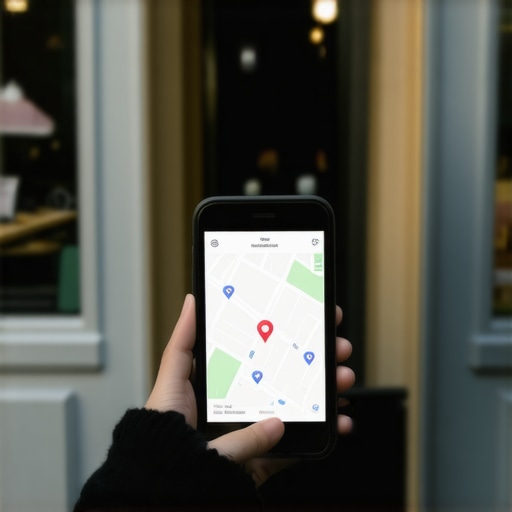
Fixing Business Confusion When Profiles Merge Accidentally
The silent death of a local brand identity
Merged Google Business Profiles occur when the algorithm incorrectly identifies two distinct entities as one, often due to shared addresses, phone numbers, or overlapping service areas. This results in lost reviews, suppressed visibility, and brand confusion that requires immediate diagnostic intervention and data un-merging protocols.
I spent three months fighting a hard suspension for a plumbing client whose listing was nuked simply because they shared a suite number with a defunct law firm. Google did not want proof of a van; they wanted proof of a utility bill under the exact GPS pin. The air in my office smelled like wet concrete and old paper as I dug through decades of tax records to prove that a pipe cutter and a litigator are not the same thing. This is the reality of the hyper-local layer. The system is not a simple directory. It is a spatial database where your proximity beacon is always under threat from data fragmentation. When two profiles merge, your digital bloodline is corrupted. You lose reviews that took years to earn. You lose the map pack rankings that feed your family. You are forced to prove you exist in a world that increasingly trusts the math over the merchant. If you find yourself in this situation, separating profiles and fixing accidental listing confusion becomes your primary mission. It is a forensic fight. It requires a deep understanding of the centroid theory. A business listing is not a profile; it is a coordinate in a distance-weighted signal. When that signal is crossed, the results are catastrophic.
“Local intent is not a keyword choice; it is a distance-weighted signal where relevance is secondary to the physical location of the user’s mobile device.” – Map Search Fundamental
The phantom overlap in the data stream
Digital profile collisions happen when Google’s automated systems detect high levels of similarity in the Name, Address, and Phone number data points across the web. This data collision often triggers a manual action or an automatic merge that hides the secondary listing from the search results entirely.
The algorithm is hungry for certainty. It hates ambiguity. When it sees two businesses at 123 Main Street, it looks for the unique identifiers. If those identifiers are missing, it assumes a duplicate. This is why unifying listing data for businesses with many offices is a safeguard against these collisions. The problem is often the microscopic math of GPS. A single digit off in a latitude or longitude coordinate can place your front door inside your neighbor’s lobby. This spatial error triggers a proximity collapse. You must look at your CID number. This is the unique digital fingerprint for your listing. When profiles merge, one CID is usually swallowed by another. You need solving accidental listing merges to save your brand image strategies to extract your data from the primary host listing. It is a delicate process of proving distinct utility bills and separate entrances. The smell of wet concrete reminds me of the physical reality of these locations. You cannot just click a button to fix this. You have to document the physical environment. You have to show the signage. You have to show the separate mailbox. The algorithm needs sensory proof.
The forensic path to separation
Un-merging a business listing requires a systematic approach to identifying the root cause of the data overlap and presenting a clear evidence chain to Google Support. Success hinges on documenting unique business licenses, distinct physical entrances, and separate telecommunications accounts to establish individual brand identities in the spatial database.
First, you must conduct a thorough audit. Why did the algorithm think you were someone else? Was it a shared phone number? Was it a lazy citation update? Many businesses suffer because of why merged gmb listings create brand confusion and how to fix it. They let their data drift. They ignore the small signals. If you are struggling with a merge, you might also need expert recovery services for hard to fix ranking bans. The process involves isolating the CIDs. You must reach out to support with a very specific set of documents. Do not just send a photo of your business card. Send a photo of your front door with the address clearly visible. Send a video walk-through of the space. The system responds to undeniable physical evidence. It is about establishing your own point of sale data. It is about proving your service area polygon is unique. This is how you reclaim your reviews. This is how you reclaim your history. The pin moved. The lead died. You have to move the pin back.
Local Authority Reading List
- The Ultimate Local Ranking Handbook
- Building Your DIY Ranking Toolkit
- Fixing Multi-Location Citations
- Unifying Your Business Language
- Flushing Spam From Your Category
Tools to fix low gmb rankings and restore identity
Recovery from a profile merge requires specialized tools that can track local ranking fluctuations across a grid and identify the specific citation errors that led to the data corruption. Using a custom toolkit allows you to monitor the health of your NAP data and prevent future algorithmic overlaps.
You need a google maps ranking toolkit for local businesses that goes beyond basic tracking. You need a system that alerts you when a citation changes. A single directory update from an old provider can trigger a merge. The data is interconnected. One small error in a secondary tier directory can ripple through the entire ecosystem. This is why building your essential gmb ranking toolkit from scratch is vital for long-term survival. You should also consider seo services to fix toxic backlink profile issues. If your backlinks are pointing to a merged URL, your authority is being split. You are feeding a ghost listing. You need clean, distinct signals. The math of local search is unforgiving. If your data is 90 percent accurate, the algorithm sees 10 percent doubt. In a competitive market, 10 percent doubt is enough to push you out of the top three. You need total clarity. You need a fortress of data. This is how you win in the vicinity algorithm.
“A business listing is a proximity beacon. When the beacon flickers due to data fragmentation, the map pack collapses for that entity.” – Vicinity Algorithm Whitepaper
Professional recovery strategies for complex ranking issues
Complex penalty cases involving merged profiles require a deep dive into the historical data of both listings to identify where the trust score was compromised. Strategic recovery involves a combination of technical SEO audits, support escalations, and the purging of inconsistent digital footprints across third-party platforms.
Sometimes the standard tools are not enough. When a profile is deeply entangled, you need professional recovery strategies for complex ranking issues. This is especially true if you are facing solving the most difficult local search penalty scenarios. The algorithm might have flagged you for more than just a merge. It might see you as a spam risk. This is a battle for your reputation. I have seen businesses disappear for months because they tried to fix it themselves and only made the data messier. They changed their name too many times. They moved their pin back and forth. This looks like manipulation. It looks like map spam. You must be patient. You must be precise. Using seo consulting services for complex penalty cases can provide the bridge you need to talk to the right people at Google. It is about the language you use in your appeal. It is about the clarity of your proof. You are not just a business owner; you are a data architect. You are building a case for your own existence.
The three mile radius that determines your revenue
Proximity is the single most powerful factor in local search, and a merged profile effectively halves your visibility by confusing the geographic center of your business. To dominate your immediate three mile radius, you must ensure that your listing is free from all data conflicts and correctly positioned in the spatial database.
The radius is your lifeblood. If your profile merges with a business three miles away, Google might split the difference. Now you rank in the middle of a park where no one lives. You are invisible to the people standing on your street. This is why the beginner fix for moving your map pin higher is often about data cleaning, not just optimization. You need to use gmb optimization toolkit for service businesses to define your territory. If you are a service area business, your polygon must be precise. Do not claim the whole state. Claim the streets you actually drive on. This builds local authority. It tells the algorithm that you are the primary choice for that specific coordinate. When the data is clean, the proximity signal is strong. The pin is steady. The leads flow. Do not let a data merge steal your territory. Stand your ground with physical proof and mathematical precision. Your revenue depends on it.