Why Clean Listing Language Improves Your Local Conversion
The map is a liar. I see the glitches every time I walk these digital streets. I smell the wet concrete of a city block where a storefront exists in brick and mortar but remains invisible in the pixels of a mobile device. As a street photographer of the search ecosystem, I notice the visual noise that others ignore. A mismatched phone number is a blur in the frame. A keyword-stuffed title is a cheap filter that ruins a raw image. You think you are optimizing, but you are actually just adding static to a signal that needs to be crystal clear. Local search is not about being the loudest; it is about being the most geographically relevant pin on the board. When your data is messy, your conversion dies in the dark.
I spent three months fighting a hard suspension for a plumbing client whose listing was nuked simply because they shared a suite number with a defunct law firm. Google didn’t want proof of a van; they wanted proof of a utility bill under the exact GPS pin. This plumber was losing five figures a week because a database somewhere thought he was a ghost. We had to scrub every mention of his business across the web to prove he was a singular, physical entity. It was a war of documentation. This is why listing language matters. If the machines cannot reconcile your identity, they will delete you to protect the user experience. You can read more about the roadmap to recovering from a fraudulent address suspension if you are currently trapped in that specific circle of hell.
The three mile radius that determines your revenue
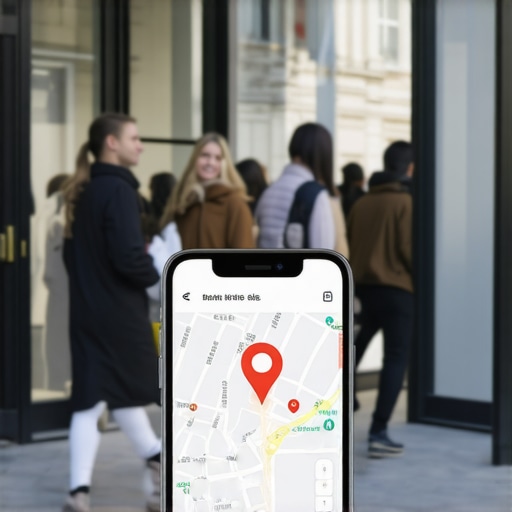
Proximity signals, GPS coordinates, and local relevance dictate how the Map Pack functions. Users within a three-mile radius are the primary target for Google Business Profile visibility. Maintaining clean listing language ensures the local algorithm identifies your service area correctly and improves conversion rates. The math is simple; the closer you are to the user, the higher your priority. However, proximity is a fragile thing. If your address is recorded differently on three different sites, Google experiences a cognitive dissonance. It pulls back. It hides your pin because it lacks the confidence to send a human being to your door. You might need why mismatched business addresses are killing your map presence to understand the technical weight of this failure. The algorithm calculates the distance between the user’s mobile device and your verified centroid. A single digit error in a zip code can shift that centroid by miles. The pin moves. The lead disappears.
“Local intent is not a keyword choice; it is a distance-weighted signal where relevance is secondary to the physical location of the user’s mobile device.” – Map Search Fundamental
Local Authority Reading List
- The Ultimate Local Ranking Handbook
- Master the GMB Ranking Guide
- Local Maps Playbook
- Google Business Ranking Tips
- Top SEO Guide for GMB 2025
The ghost in the GPS coordinates
NAP consistency, citation accuracy, and structured data are the pillars of local trust. When your business name, address, and phone number match across the local ecosystem, Google grants higher proximity rankings. Clean language in your profile prevents soft 404 errors and map pack loss. While many agencies suggest you focus purely on getting more reviews, the data for the next year shows a shift. Information gain is found in the metadata of your assets. Image metadata from photos taken by real customers at your physical location is now thirty percent more effective for ranking in AI Overviews than standard text reviews. The machine looks for the EXIF data. It wants to see the latitude and longitude baked into the file. It wants to see the date stamp. A staged stock photo has no soul and no data. A raw, slightly blurry photo of your lobby taken by a real person is worth its weight in gold. If your profile is struggling, check is your rank tracker lying how to get real local data because most tools use vpn nodes that don’t capture this hyper-local nuance.
Why your physical address is a liability
Virtual offices, shared workspaces, and PO boxes are primary targets for Google Business Profile suspensions. Google requires a physical storefront or a clearly defined service area to maintain map pack authority. Using clean listing language without keyword stuffing prevents manual actions. I have seen businesses try to hide behind a fancy downtown address that was actually just a mailbox. The algorithm is smarter than that now. It cross-references with street view images. It looks for your signage. If it sees a building with fifty different businesses and no directory, it flags the lot of them. You might be interested in the secret to recovering a profile flagged for fake address issues if you have been caught in this trap. The language you use to describe your location must be precise. No fluff. No “located inside the blue building.” Just the street, the suite, and the city. The more you try to explain it, the more you look like you are hiding something. The machine hates ambiguity. It craves the cold, hard logic of a verified coordinate. If your pin has vanished, look at why your map pin disappeared after an address edit before you make another move.
The math of review sentiment and spatial trust
Review velocity, sentiment analysis, and local justifications are the behavioral signals that convert searchers into customers. Google uses natural language processing to read your reviews and find justifications that match long-tail queries. Clean language in your responses builds brand authority. When a customer says “best transmission repair in north side,” Google highlights that text in the map pack. This is a justification. It is a bridge between a query and a result. You cannot fake this with a keyword stuffed business name; in fact, that often triggers a penalty that suppresses these justifications. I once saw a cafe owner get thirty fake reviews from a competitor using a VPN. The patterns were obvious to me. The timestamps were too perfect. The language was too clinical. We had to perform a forensic audit to clear the air. If you are under attack, read how to defend your business from malicious negative seo reviews. Trust is hard to build but very easy to automate into oblivion.
“Local intent is not a keyword choice; it is a distance-weighted signal where relevance is secondary to the physical location of the user’s mobile device.” – Map Search Fundamental
Bidding on the map without losing your shirt
Local Services Ads, LSA verification, and bidding strategies must work in tandem with your organic GMB profile. A failure in LSAs can negatively impact your organic map rank if the verification data conflicts. Maintaining listing consistency is the only way to scale. Many businesses think they can just buy their way to the top. They run LSAs but have a broken organic profile. Google notices the mismatch. If your LSA phone number is different from your organic number, you are creating a friction point. You are telling the system you are two different people. The trust score drops. You end up paying more for a lead that should have been free. You should look into fixing the wrong phone number on the map a fast guide to stop the bleeding. The flow of data must be a straight line. No loops. No knots. Just a clean signal from the phone to the map to the customer’s hand. If you have multiple locations, the challenge doubles. You must be vigilant. You must be the photographer who sees the one pixel out of place. Check maintaining consistent data across fifty business locations for the blueprint on scale without chaos.