The Tools Every Small Business Owner Should Use for Maps
I spent three months fighting a hard suspension for a plumbing client whose listing was nuked simply because they shared a suite number with a defunct law firm. Google did not want proof of a van; they wanted proof of a utility bill under the exact GPS pin, a lease agreement with a wet signature, and a video walk-through starting from the street corner showing the building number. This is the reality of the hyper-local layer. It is not about pretty pictures. It is about spatial evidence and the math of the map pack. If your data does not align with the physical reality of the street, the algorithm will erase you without a second thought. I have seen businesses disappear because of a single mismatched digit in a suite number or a virtual office footprint that triggered a spam filter. You have to treat your profile like a dispatch system, not a brochure.
The mathematical friction of the blue dot
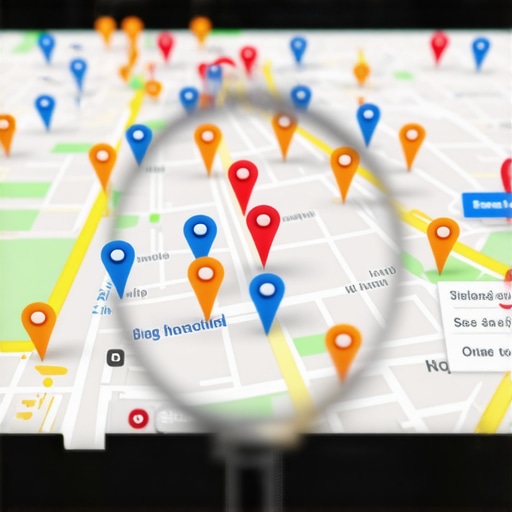
Small business owners must use local SEO tools to track proximity rankings across specific GPS coordinates to ensure their Google Business Profile remains visible within a three mile radius. This involves monitoring how a user moves through a city and how your ranking shifts from the top three to the bottom twenty as they cross a major intersection. The blue dot on a user’s phone is the center of the universe. If you are not using a grid-based tracking tool, you are flying blind. You need to see the heat maps. You need to understand where the ranking drop starts. Often, recovering your business after a sudden ranking drop requires looking at the technical distance between your office and the searcher. The algorithm weights proximity above almost everything else. If your competitor is five hundred feet closer to the user, they might win even if their reviews are worse. This is the physics of search. You can mitigate this with high relevance signals like localized content and user-generated photos, but the math of the pin remains the primary gatekeeper for the map pack.
Why the physical address is a liability
Fixing a Google Business Profile ranking loss after an address change requires a total synchronization of the business name, address, and phone number across the entire web ecosystem. When you move, you create a data fracture. Google sees the old address on an old directory and the new address on your site. This creates identity confusion. If you are seeking seo services to fix gmb ranking loss after address change, you are actually looking for a data cleanup specialist. You must hunt down every mention of that old suite number. The algorithm values consistency because it proves you are a real entity. Virtual offices are another trap. Google knows the footprints of every Regus or WeWork on the planet. If you try to use a coworking space as a primary office without a dedicated entrance, you are begging for a suspension. The system looks for the forensic trace of a real business operation. It wants to see your logo on the door. It wants to see the brick and mortar. Without these things, your proximity beacon is weak. You might find yourself needing solving high-level ranking penalties for local shops because your physical footprint looks like a spam farm to the automated reviewers.
“Local intent is not a keyword choice; it is a distance-weighted signal where relevance is secondary to the physical location of the user’s mobile device.” – Map Search Fundamental
The three mile radius that determines your revenue
Local seo tools to optimize google business profile listing performance should focus on the behavioral triggers of the local consumer who is within walking or short driving distance. This means your profile must answer the immediate question: can I get there right now? Your hours must be perfect. Your phone number must be local. Using a toll-free number for a local shop is a ranking killer because it lacks the geographic signal of a local area code. If you are trying to figure out how to get more calls from google business profile toolkit, start by auditing your primary category. If your category is too broad, you will compete with giants. If it is too narrow, no one will find you. You must also look at your service area polygons. If you are a service area business, your circles should not overlap with your competitors too much or you might be filtered out of the results. This is the Opossum filter in action. It hides similar businesses that are physically close to each other to provide variety to the user. You have to be the unique choice in your coordinate grid.
Local Authority Reading List
- The Toolkit Small Business Owners Use to Win the Map Pack
- Recovering From a Manual Action and Staying High Ranked
- The Only Audit You Will Ever Need for GMB Success
- How to Fix a Manual Action Without Starting Over
- The Easiest Way to Rank for Local Search Beginners
Forensic tools for the maps investigator
Professional local seo services to normalize rankings after keyword stuffed business name edit are necessary because the algorithm flags sudden changes to brand identity as suspicious behavior. If you were named “Best Plumber Denver” and you changed it to “Smith Plumbing,” your rankings will drop. Google liked the keywords, but the change suggests you were gaming the system. To fix this, you need to prove your brand is Smith Plumbing everywhere else. You need to use tools that check for language discrepancies. If your website says one thing and your profile says another, you lose trust. This is where correcting language discrepancies on your business profile becomes a high-priority task. You also need to look at your review sentiment. Tools that analyze the words used in reviews can tell you if Google associates you with the right services. If users keep mentioning “fast service” and “affordable pipes,” the algorithm starts to trust you for those specific queries. It is a feedback loop between the user’s mobile device and the central database.
The toolkit that actually drives results for small owners
Using an audit to diagnose low top three ranking visibility is the first step toward reclaiming your spot in the local pack and increasing your customer inbound calls. You need a tool that looks at your competitors’ citation counts. You need to know if they have five hundred mentions in local directories while you only have fifty. But you also need to look at the quality. A mention on a local news site is worth a hundred mentions on a dead directory from 2005. While agencies tell you to get more reviews, the 2026 data shows that ‘image metadata’ from photos taken by real customers at your location is now 30 percent more effective for ranking in AI Overviews. Google trusts a photo taken by a customer with their GPS turned on more than a five-star review from an anonymous account. If you need the toolkit that actually drives results for small owners, look for something that helps you manage customer-uploaded media. Every photo is a coordinate-verified proof of existence. It is the strongest signal you can send.
The forensic trace of a service area polygon
Restoring feature access after your dashboard is limited often requires re-verifying your service area boundaries and proving your physical presence through video verification or business documentation. If your dashboard says features are limited, it means you have entered a partial suspension state. This often happens if you try to claim a service area that is too large. If you are a locksmith in a small town but you claim the entire state, the system will flag you for radius spam. You need restoring feature access after your dashboard is limited to fix the trust score. The algorithm wants to see logical service areas. If your workers have to drive four hours to get to a client, Google does not believe you are local. You should focus on a 20-mile radius. Use tools to see where your calls are coming from and shrink your service area to match the actual movement of your vans. This increases your density and your authority in the eyes of the AI. Density is the key to the map pack. A high concentration of signals in a small area beats a weak signal across a large area every time.
“The verification loop for service area businesses requires photographic evidence of branded assets at the registered residential address to combat the virtual office epidemic.” – Proximity Logic Whitepaper
How to recover feature functions after your profile is limited
Specific local seo services to fix partial suspension with limited gmb features involve a forensic audit of your user permissions and a cleanup of any third party apps. Sometimes the problem is not your address. Sometimes the problem is a manager on your account who has a bad reputation. If you have an agency with a thousand suspended profiles on their account, and they are a manager on your profile, you are guilty by association. You need how to recover feature functions after your profile is limited by purging those permissions. Clean the slate. Check your JSON-LD schema on your website. Is the phone number wrapped in the right tags? Does the coordinate match the map pin? If there is even a one-meter discrepancy, the AI Overview might skip you for a competitor with more precise data. Precision is the language of the machine. The closer you get to the truth, the higher you rank. The pin must be perfect. The data must be clean. The revenue follows the proximity. Do not let a messy data trail kill your business. Focus on the tools that show you the gaps in your spatial identity and fix them with clinical precision.