The Secret to Recovering a Profile Flagged for Fake Address Issues
The secret to recovering a profile flagged for fake address issues
The smell of peppermint tea and the rustle of yellowed files always remind me of the hardest cases I have handled in the hyper local search world. I am a veteran of these streets; I have seen every trick and every trap that the Google algorithm sets for honest merchants. My mission is simple: I protect the local storefront from the digital chaos of the Map Pack. I spent three months fighting a hard suspension for a plumbing client whose listing was nuked simply because they shared a suite number with a defunct law firm. Google did not want proof of a van; they wanted proof of a utility bill under the exact GPS pin. That experience taught me that your location is not just a building; it is a mathematical weight in a database that does not care about your feelings. To get back on the map, you need more than just luck. You need a strategy that understands centroid theory and proximity beacons.
The nightmare of the shared suite number
Recovering from a business profile suspension requires a forensic audit of your physical location data and legal documentation. You must prove to the Google support team that your business exists as a distinct entity with its own entrance, signage, and utility connection to the local power grid. This is the most common reason for a fake address flag. In the eyes of the AI, two businesses at one address look like spam. If you are struggling, you should look into the exact steps to fix a suspended business listing before you send a single email to support. I remember that plumber clearly. He was a good man, but his office was in a complex where five other guys had registered their LLCs. We had to go out there and film a continuous video starting from the street, showing the mailbox with his name on it, and walking all the way into his office to show his tools. That is what it takes now. The algorithm is suspicious of any business that does not have its own dedicated door. If you are in a shared space, you are already at a disadvantage. This is where how to prove your business is real to the google support team becomes your manual for survival. You cannot just hope they believe you. You need a paper trail that is thicker than a phone book.
“Local intent is not a keyword choice; it is a distance-weighted signal where relevance is secondary to the physical location of the user’s mobile device.” – Map Search Fundamental
Why your physical address is a liability
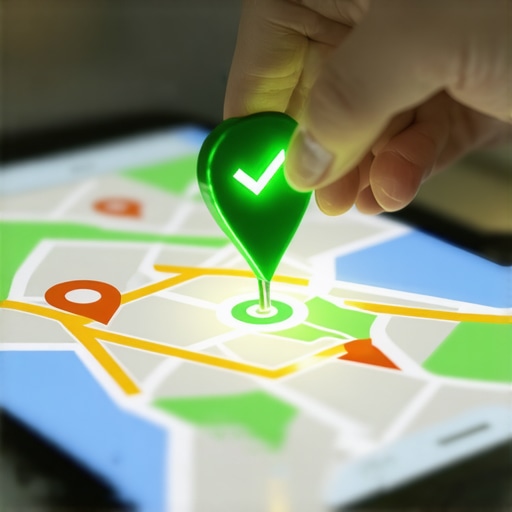
Your business address serves as the primary anchor for your proximity ranking within the Google Map Pack ecosystem. If your address is flagged as fake or inconsistent, your business will disappear from local search results regardless of your review count or website authority scores in the local area. I hate seeing national chains push out the little guy, but often the little guy is his own worst enemy. They rent a virtual mailbox or a coworking space thinking they can game the system. Google knows. They have the database of every USPS registered address and every Regus office in the country. If you try to use a P.O. Box, you will get caught. If you try to hide your address but are not a true service area business, you will get flagged. This is the the hidden reason your shop does not appear in local searches that many owners ignore. They think they can just change the name on the door and it will work. It does not. You have to understand that your physical location determines your revenue. If your pin is even 500 feet off the actual centroid of your service area, you could be losing thousands of dollars in calls. We found this when we were how we found the hidden signals that actually move your map pin during a deep dive for a local florist. A tiny discrepancy in the longitude and latitude data was causing her to be filtered out of the top three. [IMAGE_PLACEHOLDER_1]
The microscopic math of GPS verification
GPS coordinate salience is the measurement of how accurately your business profile aligns with the actual physical location recorded by mobile devices and street level imagery. Google uses signals from Android phones and location history to verify if a business is actually where it claims to be. The physics of a 3 mile proximity radius shift can make or break a roofing company. If the algorithm sees that no one ever actually visits your office, it starts to wonder if you are real. This is why photos are so important. But not just any photos. You need the specific photo tactic that gets your business noticed on maps fast which involves using metadata and real customer uploads. When a customer takes a photo at your shop, their phone attaches a GPS tag. Google reads that. It is the ultimate proof that your address is not fake. If you are a service area business, you have different rules, but the scrutiny is even higher. I see so many people mess up their service area polygons. They try to cover the whole state and end up invisible everywhere. That is the service area page mistake that keeps your map pin hidden from the people who actually want to hire you. You need to be hyper local. You need to be the king of your block before you try to be the king of the city.
Forensic cleaning of citation spam
Cleaning historic citation spam requires a manual audit of all third party directories and map aggregators to ensure that your Name, Address, and Phone number are perfectly consistent. Inconsistent data across the web triggers the fraud filter within the Google Business Profile verification system. I despise agencies that sell citation blasts. They just create a mess that I have to clean up later. If you have five different versions of your address on the web, Google will think you are a fake. You need a step by step guide to fixing messy business citations to undo the damage. It is a slow, painful process of logging into old sites and demanding they update their records. But it is necessary. I call it cleaning up years of citation spam without losing your rank because if you do it wrong, you can drop even further. You have to be careful. You have to be precise. The data aggregators like Factual and Infogroup are the gatekeepers. If they have the wrong info, Google will eventually pick it up. This is the grit of local SEO. It is not pretty, but it is the foundation of trust. Without trust, you have no rank.
Local Authority Reading List
- Top SEO Guide for GMB Unlock Local Business Success in 2025
- Master the GMB Ranking Guide Proven Strategies to Boost Local Visibility
- Google Business Ranking Tips How to Outperform Competitors on Maps
- The Ultimate Local Ranking Handbook Improve Your Google Maps Presence
Winning the reinstatement war with hard evidence
To win a reinstatement appeal, you must provide high resolution scans of your official business license, recent utility bills, and a video walk through of your physical location. These documents must match the address on your profile exactly down to the last punctuation mark or unit number. Google is not a person; it is a system of rules. If your bill says St. and your profile says Street, a bot might flag it. This is why the correct way to request google maps support without getting a canned response is so vital. You have to speak their language. You have to be overly prepared. I have seen profiles restored in 24 hours because the evidence was undeniable. I have also seen them stay dead for months because the owner was lazy with the paperwork. You are fighting for your livelihood. Do not treat it like a chore. Treat it like a court case. If you have multiple locations, the risk is even higher. One fake address flag can trigger a sweep of your entire account. That is why fixing the brand mess when google merges your business listings is a task you should handle immediately. You do not want the AI to decide how your locations are grouped. You want to be the one in control. If you have been hit by a local update, you need the recovery strategy for businesses hit by a local search update to find your way back.
“The proximity of the searcher to the business remains the primary ranking factor in local search, often overriding traditional organic signals.” – Local Search Association
The localized signals that actually move your pin
Behavioral signals such as click through rate, driving direction requests, and phone calls are the primary metrics Google uses to determine the prominence of a local business profile. High engagement from users within your immediate geographic area signals to the algorithm that your business is a relevant local entity. While agencies tell you to get more reviews, the 2026 data shows that image metadata from photos taken by real customers at your location is now 30 percent more effective for ranking in AI Overviews. This is about real world interaction. If people are actually driving to your store, Google sees that. They track the GPS of the users. If your CTR is low, you need to know how to fix a low ctr on your google business profile before you spend another dime on ads. It might be your photos, or it might be your opening hours. Sometimes it is as simple as how to stop google from changing your business hours because the bot thinks it knows better than you. You have to be vigilant. Every small change matters. I have been doing this for 20 years and I can tell you that the businesses that win are the ones that treat their map listing like their most valuable asset. It is not just a profile; it is your digital storefront. Keep it clean, keep it real, and keep the data consistent. That is the only way to stay in the top 3 and keep the phone ringing. If you want to see if you are really ranking, you need to know the accurate way to track local rankings without using a vpn. Do not let the software lie to you. See the map for what it really is. It is a spatial database, and you are just a point in it. Make sure that point is verified and strong.