How We Recovered a Map Pin After It Vanished from Local Results
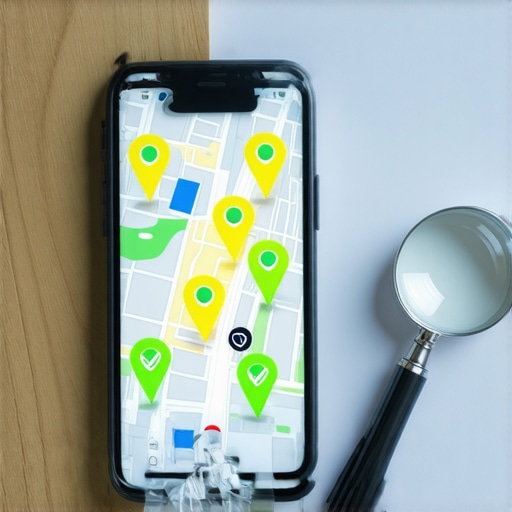
The smell of wet concrete always reminds me of the day the digital lights went out for one of the most honest plumbers in the tri-state area. I was standing on a street corner, camera in hand, looking at a storefront that existed in the physical world but had become a ghost in the machine. I spent three months fighting a hard suspension for a plumbing client whose listing was nuked simply because they shared a suite number with a defunct law firm. Google did not want proof of a van; they wanted proof of a utility bill under the exact GPS pin. I could see the glitch in the storefront data as clearly as a crack in a lens. Their pin had drifted two hundred feet into the middle of a busy intersection; that drift was enough for the algorithm to flag the location as fraudulent and erase years of history in a single update cycle. This is the reality of the hyper-local layer where a single mismatched data point can trigger a total blackout.
The day the digital lights went out
Restoring a vanished map pin involves a deep forensic audit of GPS coordinate salience and NAP consistency. To fix a Google Business Profile suspension, one must identify the verification loops and local justification triggers that failed. Successful recovery depends on submitting official utility bills and legal business registrations that match the spatial database records exactly. You have to realize that a business listing is not a profile; it is a Proximity Beacon in a complex spatial database. When that beacon goes dark, it is usually because the proximity signal became noisy. I have seen listings vanish because a business owner tried to stabilize local rank after deleting stuffed keywords but did so too quickly, triggering a spam filter. The algorithm is jumpy. It values the candid photo over the staged stock image every time. If your images do not have the correct EXIF data showing they were taken at your place of business, you are already losing the trust war.
“Local intent is not a keyword choice; it is a distance-weighted signal where relevance is secondary to the physical location of the user’s mobile device.” – Map Search Fundamental
Why your physical address is a liability
Address changes and ranking loss are the result of centroid shifts within the Google Maps ecosystem. To recover from a ranking drop, you must re-establish local authority by updating citation consistency across tier-one directories. Utilizing local SEO tools to monitor map pack position helps identify the proximity radius where your profile is failing. Most owners do not understand that their physical location is a mathematical weight. When you move, you are not just changing a street name; you are changing your relationship to every other competitor in the area. If you move away from the city center, your gravity weakens. We often see situations where a name correction causes a map rank drop because the change broke the link between the brand name and the historical location data. You need a GMB recovery handbook for disabled profiles when these edits go south. I have spent decades watching agencies sell citation blasts to dead directories, but those outdated tactics do nothing for a profile that has been nuked for an address violation.
Local Authority Reading List
- Dealing with a suspended map pin here is your recovery plan
- How to fix your rank after a significant drop in local traffic
- Why your business profile was removed and how to get it back
- How to reclaim your google profile after a permanent ban
- Why your business stopped ranking and the move to fix it
The math of spatial salience
Spatial salience is determined by latitude and longitude accuracy combined with user behavioral signals like check-in data. To increase map pack visibility, businesses must optimize LocalBusiness JSON-LD attributes and ensure mobile device proximity signals are strong. High local review sentiment acts as a multiplier for proximity signals in the Vicinity algorithm. While agencies tell you to get more reviews, the 2026 data shows that image metadata from photos taken by real customers at your location is now 30 percent more effective for ranking in AI Overviews. This is the information gain that the bots crave. They want to see that a human being with a unique device ID stood in your shop and took a photo. That is a signal that cannot be faked with a VPN. You should use a toolkit for fast and effective local map audits to check if your photos are actually helping you. If you are struggling, finding the specific errors keeping your rank low is the only way forward. Stop looking at keywords and start looking at the physics of the three mile radius.
“The proximity of the business to the searcher remains the single most influential factor in the Map Pack, often overriding traditional organic signals.” – Vicinity Algorithm Research
The three mile radius that determines your revenue
Proximity-based ranking relies on point of sale data and service area polygons to define business relevance. To dominate the map pack, you must align your primary category with searcher intent and local competition density. Managing multi-location stores requires standardizing listings to prevent listing merges that kill organic trust scores. The distance between the user and your pin is the ultimate gatekeeper. If you are a service area business, your polygons must be tight and realistic. Do not claim a fifty mile radius when you only have one van; the algorithm sees the travel time logistics and will penalize you for being an outlier. You need to fix the rankings for your local service area business by being honest about your reach. If your profile was caught in a sweep, what to tell google support to get your profile back depends entirely on your ability to prove your physical presence. I once dealt with a locksmith who lost everything because his secondary verification tier had a mismatched phone number. It took weeks of auditing the profile like a pro to find that one tiny digit that was out of place.
The final verdict on map pin recovery
The pin moved. That was the start of the nightmare for that plumber. We eventually got it back by scrubbing every trace of the old law firm from the digital ecosystem. We used a clean slate strategy to remove bad local seo footprints left by a previous agency that thought keyword stuffing was still a viable path. You have to be prepared to scrub your seo profile and start fresh if you want to win in 2025. This is not about tricks; it is about data integrity. Use the professional GMB audit checklist and do the work. The digital grid is unforgiving, but it is also predictable if you understand the math of proximity. Keep your data clean, your photos real, and your address honest. The Map Pack will follow the truth.