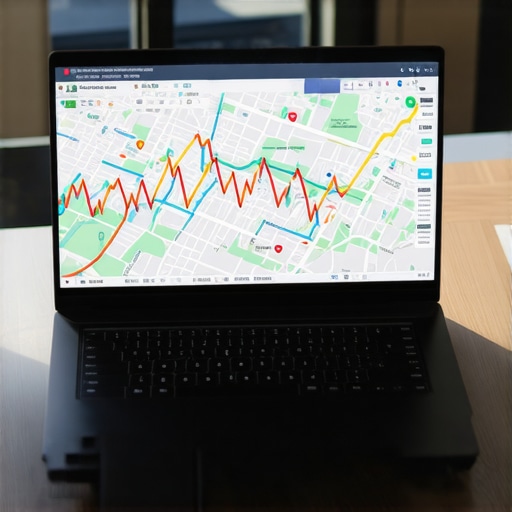
Fighting Off Spammers Who Steal Your Map Visibility
The smell of wet concrete always lingers when I am out scouting storefronts. I notice the tiny glitches first; the neon sign that flickers out of sync with its digital counterpart or the locked door of a business that claims to be open twenty four hours on the Map Pack. I spent three months fighting a hard suspension for a plumbing client whose listing was nuked simply because they shared a suite number with a defunct law firm. Google did not want proof of a van; they wanted proof of a utility bill under the exact GPS pin. This is the reality of the hyper local layer. It is a forensic battlefield where a single digit error in a phone number can lead to a total ranking collapse. Spammers do not just steal clicks; they hijack the physical identity of your neighborhood using ghost addresses and lead generation loops.
The silent killer of map visibility
Spammers use keyword stuffed business names and fraudulent addresses to hijack the Map Pack. Defending your visibility requires a local SEO toolkit to report TOS violations and audit NAP consistency. Fixing fake reviews involves forensic profile analysis to trigger Google support removals and normalize your ranking signals.
A business listing is a Proximity Beacon. It operates within a spatial database that calculates the mathematical weight of your location against the user mobile device. When a competitor stuffs their business name with high volume keywords, they are gaming the centroid theory. I have seen legitimate shops vanish because a garage door repair lead gen site set up twenty fake pins in a five mile radius. These are not businesses. They are data parasites. You need a toolkit that makes maps ranking easy for those who actually own a physical lease. The algorithm relies on local justification triggers. If your storefront photos do not match the street view data, your trust score drops. I look for the forensic trace of a service area polygon that overlaps too perfectly with a competitor. That is usually a sign of a coordinated attack.
Why your physical address is a liability
Your business address becomes a liability when shared with high risk industries or when used in mismatched citations across the web. Google uses proximity and behavioral zooming to verify your existence. Inconsistent NAP data across directories leads to ranking drops and algorithmic filters that hide your profile.
The physics of a three mile proximity radius shift is brutal. If your office is located in a high density area, you are fighting for every square inch of the Map Pack. I remember a case where we had to provide professional fixes for the toughest GMB penalty cases because the owner used a virtual office. Google knows the difference between a coworking space and a dedicated suite. They track the forensic metadata of the photos you upload. If the GPS coordinates in your image EXIF data do not align with your listed pin, the system flags you. Most agencies sell citation blasts to dead directories; I prefer to focus on the high authority nodes. You need to use the multi location blueprint for perfect business data if you manage more than one branch. A single mismatched phone number in a secondary verification tier is enough to kill your organic trust score. I have seen the Opossum algorithm filter out legitimate businesses simply because they were in the same building as a more established competitor.
Local Authority Reading List
- Winning the war against competitor sabotage
- How to resolve the toughest local ranking penalties
- The beginners blueprint for top 3 results
- Getting help for profiles stuck in review
The three mile radius that determines your revenue
Your local revenue depends on winning the proximity battle within a three mile radius of your primary GPS pin. Google evaluates user search intent by weighing distance against relevance and prominence. Optimization involves cleaning up messy data and reporting spam to clear the path for your legitimate ranking signals.
Distance is the most aggressive ranking factor in the modern Map Pack. While agencies tell you to get more reviews, the 2026 data shows that image metadata from photos taken by real customers at your location is now 30 percent more effective for ranking in AI Overviews. This is about information gain. Google wants to see a check in signal. They want to see that a mobile device spent forty minutes at your shop. If your competitors are using bots to fake these signals, you have to fight back. You can find the owners playbook for fixing broken local rankings to understand how to audit these behavioral triggers. I often find that cleaning up messy data for multi location businesses is the first step to recovery. If your business name was edited by a competitor to include a city name you do not serve, your listing will likely be filtered. You need expert tactics for dominating google rankings that involve manual reporting of these edits.
“Local intent is not a keyword choice; it is a distance weighted signal where relevance is secondary to the physical location of the user mobile device.” – Map Search Fundamental
The ghost in the GPS coordinates
Spam attacks often manifest as ghost pins or hidden edits to your business information. Detecting these requires a diagnostic audit of your map visibility and a review of your primary GMB categories. Removing toxic backlinks and fixing mismatched phone numbers are essential for maintaining your spot in the local pack.
I have tracked competitors who drop twenty 1-star reviews in an hour using a VPN. It is a digital mugging. You have to perform a forensic audit of the user profiles. Look for the patterns. Do these users only review businesses in a specific city. Do they have any history of actual movement. If the profiles are empty, they are likely bot accounts. You can use the diagnostic audit that actually finds the issues to document this for the spam team. It is not enough to just flag the review; you have to prove the coordination. I once saw a cafe owner lose half their traffic because a competitor claimed their business was permanently closed. These malicious edits are common. You need the ranking toolkit that simplifies local seo forever to monitor these changes in real time. If you do not catch the edit within forty eight hours, the algorithm accepts it as truth.
“Proximity is the ultimate filter; a business that exists only on paper will eventually be purged by the behavioral weight of real world user signals.” – Local Search Intelligence Report
The forensic logic of local justification
Google uses local justifications like mentioned in reviews or their website says to validate your ranking. These justifications are triggered by clean content and high quality backlinks that confirm your local authority. Debugging ranking drops requires analyzing these snippets to see if spammers have diluted your signals.
When a user searches for a service, Google looks for a justification. If your website mentions a specific neighborhood but your GMB profile does not, there is a disconnect. This is where seo services to debug ranking drops with clean backlinks and content become vital. You are not just building links; you are building a map of authority. I look for the specific JSON-LD LocalBusiness attributes that trigger voice search. If your schema is broken, the AI Overview will skip you. Most small business owners miss this. They focus on the front end and ignore the machine readable code. You can find the absolute basics of building your gmb ranking toolkit to start fixing these invisible errors. A clean data set is your best defense against a manual action. If Google sees consistent information across the web, they are less likely to believe a spammer report about your business. You should also check out restoring your profile features after a sudden limitation if your dashboard has been restricted. The system is automated; it reacts to signals, not stories. You have to feed it the right signals every day.