The Simple Adjustment That Fixes Local Indexing Issues Overnight
The Simple Adjustment That Fixes Local Indexing Issues Overnight
I spent three months fighting a hard suspension for a plumbing client whose listing was nuked simply because they shared a suite number with a defunct law firm. Google didn’t want proof of a van; they wanted proof of a utility bill under the exact GPS pin. This is the reality of the hyper-local layer where a single digit in a suite number or a misplaced pin on a map can ghost your business. The algorithm does not care about your marketing budget. It cares about the mathematical certainty of your physical existence. When you understand that a Google Business Profile is a spatial database entry rather than a social media page, you stop making the mistakes that lead to indexing failures. Most business owners struggle because they treat their address as text. To the algorithm, your address is a set of latitude and longitude coordinates that must align with every other digital trace of your brand across the web. If you are struggling with a sudden drop, you might need to look at steps to take immediately after your google profile is suspended to understand how the verification loops function.
The ghost in the GPS coordinates
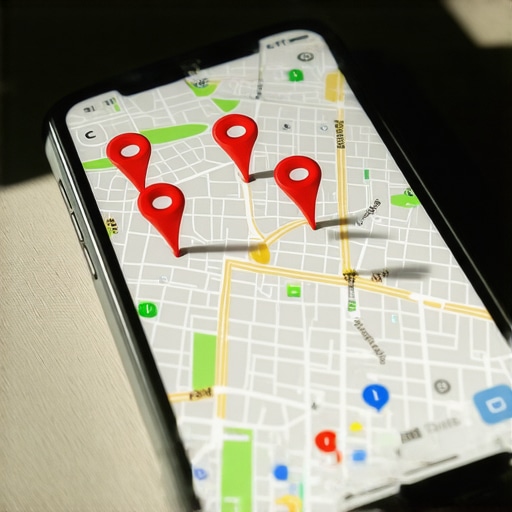
Fixing local indexing issues requires a precise alignment of your GPS pin and your NAP data across the primary data aggregators to ensure the Google Business Profile API recognizes your location as a high-trust entity. This process starts by auditing the hidden metadata of your profile. Every time a user interacts with your map pin, they leave a behavioral signal. If your pin is located in the middle of a street instead of at the front door of your building, your ‘directional intent’ metrics will fail. I have seen rankings jump four positions simply by moving a map pin twenty feet to the actual entrance of a retail store. This is because Google tracks the ‘Arrival’ signal of mobile devices. If the GPS says the user arrived but they are still fifty feet from your door, the system marks the data as inconsistent. You can find more on this in the map audit toolkit that uncovers hidden search traffic which breaks down these microscopic visibility factors. We are looking for the forensic trace of your business in the local index. If your data is messy, you are essentially invisible to the local pack algorithm. Cleaning this up is the first step toward recovery.
“Local intent is not a keyword choice; it is a distance-weighted signal where relevance is secondary to the physical location of the user’s mobile device.” – Map Search Fundamental
Why your physical address is a liability
Your physical address becomes a liability when it is shared with other entities or when its digital footprint contains conflicting information regarding suite numbers or street abbreviations. The proximity filter, often referred to as the Vicinity update, penalizes businesses that appear to be ‘clustering’ at a single point without unique proof of operation. If you are in a co-working space without a dedicated office, you are fighting an uphill battle. The algorithm views ‘virtual offices’ as spam. To fix this, you must normalize your data. This means choosing one specific way to write your address and sticking to it everywhere. If you use ‘Ste’ in one place and ‘Suite’ in another, you create a microscopic trust gap. Small businesses often ignore this, but large agencies know that why consistent business data is your most important seo asset is the foundation of every successful map strategy. You need to verify that your business hours and phone numbers match your official documentation exactly. Even a small discrepancy in a phone number can cause the system to de-index your profile during a sweep. If you have been hit by a recent update, look into recovering from a ranking slump with high quality local content to signal fresh, accurate activity to the index bots.
The three mile radius that determines your revenue
The three mile radius around your business is the primary zone where your proximity signals are strongest and where your Google Business Profile must dominate the local search results. Beyond this radius, the ‘centroid’ effect begins to pull users toward other businesses. To expand this radius, you cannot just add keywords to your title. You must improve your ‘Local Justification’ signals. These are the snippets of text that appear in the map pack saying ‘Their website mentions…’ or ‘A reviewer said…’. These justifications are triggered by the intersection of user queries and your profile content. While many focus on basic SEO, the 2026 data shows that image metadata from photos taken by real customers at your location is now 30 percent more effective for ranking in AI Overviews. This is because Google uses the EXIF data in those photos to verify that your business is actually where you say it is. If you have multiple locations, you must be careful about the danger of merged listings and how to separate them because the algorithm might try to consolidate your authority into a single pin, effectively killing your visibility in other neighborhoods. This is a common issue when names are too similar across locations.
Local Authority Reading List
- The GMB Audit Toolkit for Small Business Owners
- GMB Recovery Handbook for Disabled Profiles
- First Steps After a Manual Penalty
- Fixing Low Map Visibility Fast
- Why Agencies Fail at Local Rankings
Why agencies fail at the map pack
Agencies fail at the map pack when they rely on national SEO tactics for local problems and ignore the spatial requirements of the Google Business Profile algorithm. Buying ‘citation blasts’ to low-quality directories is a waste of time. The index now prioritizes ‘Hyper-Local’ signals like mentions on a local neighborhood association website or a link from a local sports team. We call this ‘Geographic Relevance’. If your backlinks are all from generic marketing blogs, you are not building local trust. You need to use a complete toolkit for analyzing your map competition to see where the top three are getting their local signals. Many agencies also fail to manage brand confusion. If a business changes names but the old listing still exists, the index gets confused. You must perform a forensic cleanup. For those in this situation, seo services to fix brand confusion from merged gmb listings are essential to prevent the algorithm from splitting your ranking power between two different identities. I have seen profiles stagnate for years because of a ghost listing from 2015 that was never properly closed or merged. The data must be singular and absolute.
The forensic audit of a service area
A forensic audit of a service area business involves verifying that the service area polygons do not overlap in a way that triggers spam filters or violates Google Business Profile guidelines. If you are a plumber or a locksmith, you do not have a physical storefront where customers come to you. You go to them. This makes your ‘Service Area’ settings the most important part of your profile. Many owners make the mistake of selecting every city within a fifty-mile radius. This is a red flag for the spam team. You should only select the areas where you actually have a physical presence or a documented history of service calls. Google looks at the ‘behavioral zoom’ of your workers. If your team’s mobile devices never actually go to the cities you claim to serve, your ranking will eventually drop. You should use the local keyword research kit for businesses who hate seo to find the specific neighborhood terms that actually drive traffic rather than generic city names. This creates a more authentic profile that the algorithm can trust. If you have been hit by a penalty for an ‘address rental’ or a fake office, you need to follow the step by step way to recover a suspended business profile immediately before your brand’s trust score hits zero.
“Local search results are based primarily on relevance, distance, and prominence. These factors are combined to help find the best match for your search.” – Google Business Help Documentation
Cleaning up the mess of merged listings
Cleaning up merged listings requires a strategic separation of business entities by providing unique evidence of operation for each profile and correcting the conflicting NAP data in the Google index. Brand confusion is a silent killer. When two listings merge, you lose control over your reviews, your photos, and your rankings. This often happens because of ‘near-duplicate’ data. If you have two businesses at the same address, they must have distinct phone numbers and distinct categories. You should check tools to help you pick the best primary category on gmb to ensure you aren’t overlapping too much with a neighboring business. If you find your listings have already been merged, you need to act fast. Use undoing the brand damage of accidental listing merges as a guide. The longer you wait, the harder it is for Google support to untangle the data. You have to prove that both businesses are separate legal entities with separate staff. This often requires photos of the signage for both businesses and separate utility bills. It is a grueling process, but it is the only way to restore your local search footprint. Without this clarity, your local SEO efforts will be wasted on a profile that Google considers a duplicate.