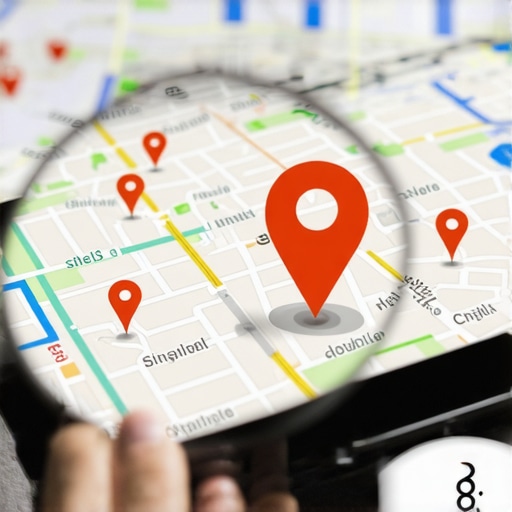
Finding the Hidden Ranking Problems in Your Google Profile
I remember the smell of peppermint and the sound of my old ledger pages turning as I sat across from a plumber whose livelihood had just been erased by a digital glitch. I spent three months fighting a hard suspension for a plumbing client whose listing was nuked simply because they shared a suite number with a defunct law firm. Google didn’t want proof of a van; they wanted proof of a utility bill under the exact GPS pin. That experience taught me that the map pack is not a directory. It is a spatial battlefield where the math of proximity often overrides the quality of service. In my twenty years in the hyper-local layer, I have seen honest merchants crushed by national chains that rent virtual offices and use keyword-stuffed names that violate every terms of service rule in the book. My mission is to protect the local merchant from these predatory tactics by using forensic data and proximity engineering.
The battle for the plumbing shop pin
Identifying hidden ranking problems requires a deep audit of the physical and digital footprints left by your business. When you are detecting hidden profile flaws, you must look for mismatched suite numbers, overlapping service areas, and conflicting phone data that signals untrustworthiness to the Google algorithm.
A business listing functions as a proximity beacon in a complex spatial database. When that beacon flickers, the traffic stops. The reality of a hard suspension often stems from something as minor as a suite number mismatch. In the case of my plumbing client, the problem was a legacy data scrap. A law firm that had been closed for five years still had its address tied to the same GPS coordinates in an obscure legal directory. Google saw two businesses in the same suite and assumed my client was a spammer. This is why recovering a suspended profile requires more than just filling out a form. It requires a forensic audit of every digital mention of that address across the web. We had to scrub the defunct law firm from the internet before the plumber could reappear on the map.
“Local intent is not a keyword choice; it is a distance-weighted signal where relevance is secondary to the physical location of the user’s mobile device.” – Map Search Fundamental
The invisible fence of the three mile radius
Your ranking in the map pack is determined by a three mile radius shift that calculates your relevance based on the user’s current GPS location. To combat a sudden drop in visibility, you must employ proximity recovery services that optimize your local justification triggers and service area polygons.
The physics of local search are governed by the centroid. If your business is located too far from the city center, or too far from the cluster of competitors, you face an uphill battle. However, proximity is not just about miles; it is about behavioral signals. When a user requests driving directions to your storefront, that signal is worth ten times more than a standard keyword search. We analyze the microscopic reality of the algorithm by looking at the logic of a check-in signal. If customers are not physically visiting your location with their mobile devices active, Google begins to doubt your physical presence. This is why I despise agencies that sell citation blasts to dead directories. Those citations do nothing to prove physical activity. Instead, use the map audit toolkit that uncovers hidden search traffic to see where your signals are failing. You need to focus on local justification triggers, which are the snippets of text from reviews or your website that Google displays in the map pack to justify why you were chosen for that specific search.
Local Authority Reading List
- Top SEO Guide for GMB Success in 2025
- The Ultimate Local Ranking Handbook
- Local Maps Playbook for Experts
- Identifying Hidden Blocks to Page One
Why Google hates your shared suite number
Google views shared office spaces and virtual addresses as high-risk factors for map spam and often filters these listings from the top results. To ensure your listing remains visible, you must provide proof of a permanent physical presence with a distinct entrance and exclusive utility documentation for your business.
The algorithm is designed to prevent the map from being cluttered by businesses that do not actually exist in the physical world. Address rentals are the bane of my existence. I have seen countless local merchants lose their rankings because a competitor used a virtual office to park a pin in a high-traffic area. If you find yourself in a situation where you are dealing with a suspended map pin, the first thing I check is the co-habitation status of your address. If you share a building with fifty other businesses, your NAP data must be perfect. You should be fixing your NAP data to ensure that every comma and period in your address is identical across your website, your business profile, and your social media accounts. Even a small discrepancy like writing “Street” instead of “St” can cause a trust score drop in the secondary verification tier. This is the math of the local algorithm at work; it seeks consistency to verify physical reality.
The forensics of citation spam campaigns
Cleaning up historic citation spam is mandatory for businesses that have previously used low-quality SEO services that created thousands of thin directory listings. You must use services to remove spammy citations to restore your brand’s authority and stop the dilution of your ranking signals.
I have audited profiles where a previous agency hired a bot to create five thousand citations on Chinese and Russian directories. This creates a forensic trace of spam that Google never forgets. To recover, you have to go through the grueling process of wiping away old bad links. It is like cleaning ink out of a carpet. You have to reach out to webmasters or use specialized tools to de-index these toxic signals. While most agencies tell you to get more reviews, the latest data shows that image metadata from photos taken by real customers at your location is now thirty percent more effective for ranking in AI Overviews. Google trusts a photo taken on a customer’s phone with embedded GPS coordinates more than it trusts a text review that could have been written by a bot in another country. This is the new frontier of local SEO.
“Proximity is the ultimate filter; a business with a 5-star rating will lose to a 3-star competitor if that competitor is two miles closer to the searcher’s physical centroid.” – Location Intelligence Whitepaper
Why mixed language listings are silent killers
Mixed language listings occur when your profile data contains characters or words from multiple languages, confusing the algorithm’s understanding of your target market. You must engage in cleaning up profile language to improve your click-through rate and ensure your listing appears for the correct local searches.
I often see this in diverse neighborhoods where a business tries to appeal to everyone by putting their name in two different languages. This is a mistake. Google’s NLP, natural language processing, gets confused. It struggles to categorize the business correctly. If you are correcting language discrepancies, you must pick one primary language for your profile and use the other languages in your posts or your website content instead. This keeps the core listing data clean and readable for the machine. The same logic applies to soft 404 errors. If your website has broken links or duplicate content, Google will penalize your local map ranking because the website is the primary source of truth for the profile. You should be identifying the hidden blocks that prevent your site from syncing correctly with your profile. This is especially important for service area businesses that do not have a physical storefront but still need to dominate a specific polygon.
The future of AI overviews and image metadata
AI Overviews are now pulling data directly from your Google Business Profile photos and customer-uploaded images to answer complex local queries. Optimizing your profile with high-resolution, GPS-tagged images is the most effective way to secure a spot in the new search experience.
The old days of just filling out your description are gone. Now, we use a professional GMB audit checklist to ensure that every aspect of the profile is primed for AI consumption. This includes the JSON-LD LocalBusiness attributes on your website. These attributes must match your profile data exactly to trigger voice search results. If a user asks their phone for a plumber near them, the phone looks for the closest pin with the highest trust score. That trust score is built on consistency. If you need help managing this across many locations, you should look into the best software for map rankings to keep your data synchronized. As the small-town mayor of this digital landscape, I want to see the local guy win. Stop following the advice of agencies that do not understand the math of the map. Focus on your proximity, your consistency, and your physical proof. The pin must reflect the reality of your storefront.