Defending Your Map Rank Against Competitor Spam Attacks
The air in my office usually smells like cold coffee and the metallic tang of an overheated server. I do not look at pretty pictures of storefronts. I look at the spatial math. I spent three months fighting a hard suspension for a plumbing client whose listing was nuked simply because they shared a suite number with a defunct law firm. Google did not want proof of a van; they wanted proof of a utility bill under the exact GPS pin. That experience taught me that the map pack is not a directory. It is a battlefield where proximity and verified data points are the only currency that matters. If your listing vanishes, it is rarely an accident. It is often a calculated strike by a competitor or a failure in your local data integrity. You must understand how to protect your Google Business Profile, Map Pack rankings, and local search visibility through forensic auditing and competitor spam removal.
The ghost in the GPS coordinates
GPS coordinates and CID numbers serve as the foundational anchors for every local business entity in the Google Maps ecosystem. When a competitor uses a fake address or a keyword-stuffed business name, they are essentially hijacking the proximity signals that should belong to your legitimate location. You can identify these ghosts by looking for patterns in their category selection and NAP consistency across the web. Most business owners ignore the math behind the pin. The pin is everything. A single shift of fifty feet can move you from the top spot to the second page of mobile search results. If you suspect someone is gaming the system, you need to learn about beating the spammers at their own game on local maps. This involves more than just clicking the suggest an edit button. It requires a deep understanding of coordinate salience. Google looks at the longitude and latitude of your business and compares it to the IP address of customers who leave reviews. If there is a mismatch, the trust score of your profile drops. Spammers use VPNs to spoof these locations, but they often leave footprints in their review velocity and image metadata. To win, you must be a detective. Look for profiles that have no exterior signage in their photos. These are usually lead generation shells designed to siphon your calls. You can start exposing and removing fake competitor map pins by documenting the lack of physical presence. I have seen entire industries in major cities dominated by these shells. It takes a systematic approach to clear the deck and reclaim your rightful Map Pack position.
Why your physical address is a liability
Physical business addresses, suite numbers, and co-working spaces represent the primary points of failure for Local SEO trust scores. Google despises address rentals and virtual offices because they degrade the user experience. If your business shares an address with ten other companies, your local ranking is at risk of being filtered or merged. This often leads to how brand confusion kills your inbound sales calls when customers cannot find your actual door. The Opossum algorithm was specifically designed to filter out listings that share the same building and category. If a competitor moves into your office complex, they might accidentally or intentionally suppress your listing. I once worked with a dentist whose listing disappeared because a massage therapist in the same building used the word dental in their GMB description. The algorithm got confused and hid the more established profile. This is why you must maintain a unique digital footprint. You should also be wary of solving accidental listing merges to save your brand image if your data starts bleeding into another company profile. Verification is the shield here. You need high-resolution video of your permanent signage, your interior workspace, and your business license. When the spam team asks for proof, a utility bill is not enough. They want to see the tools of the trade. For a plumber, that is the truck with a wrap. For a lawyer, it is the lobby with the firm name. If you cannot prove you exist at that specific GPS coordinate, you are a ghost in the eyes of the machine. The goal is to build such a strong proximity beacon that Google cannot ignore your authority. This involves cleaning up your local footprint across multiple cities to ensure no old, conflicting data remains. Inconsistencies are the cracks that spammers use to wedge their way in. Fix them before they become a portal for a manual action.
“Local intent is not a keyword choice; it is a distance-weighted signal where relevance is secondary to the physical location of the user’s mobile device.” – Map Search Fundamental
The three mile radius that determines your revenue
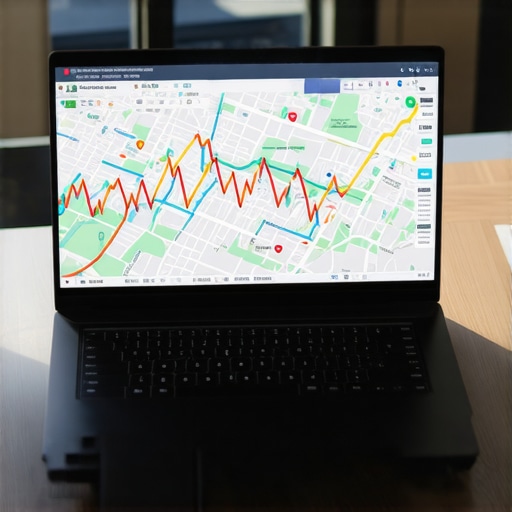
Proximity radius, centroid distance, and mobile user location are the three variables that dictate whether your phone rings or stays silent. Most businesses believe they can rank for an entire city. The truth is much more granular. You rank in a circle around your verified address. As a user moves away from your center, your Map Pack visibility decays. Spammers try to cheat this by creating service area polygons that are too large. This is a red flag. If a locksmith says they cover three states from a single house, they are lying. Google is getting better at catching this through behavioral signals. They look at where your service vehicles are actually located based on GPS data from mobile apps. To combat this, you need a how to build your own diy gmb ranking toolkit that allows you to monitor your ranking grid. A ranking grid shows you exactly where your proximity signals drop off. If you see a sudden hole in your grid, it usually means a competitor has set up a fake map pin in that specific neighborhood. You must react quickly. Use auditing your competitors to see why they outrank you to find their weaknesses. Are they using a PO Box? Is their business name stuffed with keywords like best or cheap? Report these violations. Every spam listing you remove expands your own proximity radius. It is a zero-sum game. The search volume is finite. If the spammer is taking thirty percent of the clicks, that is thirty percent of the revenue you are losing. You should also focus on the step-by-step path to local ranking success for newbies if you are just starting to map out your territory. The algorithm weights historical data heavily. The longer you have been at a verified coordinate without a policy strike, the wider your influence radius becomes. Do not reset this by changing your address unless it is absolutely necessary. A move of even a few blocks can trigger a re-verification loop that lasts weeks. During that time, your competitors will eat your lunch. I have seen businesses lose half their revenue because they moved to a cheaper office across the street without realizing it was outside their primary ranking centroid.
Forensic steps to identify a malicious review attack
Review sentiment, user profile authority, and timestamp patterns are the primary markers used to identify malicious review attacks from competitors. A sudden influx of one-star reviews with no text is a classic sign of a bot attack. These bots often use aged accounts to bypass basic filters, but they fail when you look at their geographic history. If a user reviews a bakery in London and a plumber in New York within the same hour, they are fake. You must document this. I recommend how to neutralize competitor spam without getting banned during the process. Do not retaliate by buying fake reviews for yourself. That is a fast track to a permanent ban. Instead, use the GMB support tool to flag the reviews for removal based on conflict of interest or spam. You should also consider the fast way to flush spam out of your local category by reporting the accounts themselves. Google tracks the device ID of review spammers. If you can prove a pattern, they will nuke the entire network. This is where expert recovery services for hard to fix ranking bans come into play. Sometimes, the spam is so sophisticated that the automated systems do not catch it. You need a human to review the forensic evidence. I once saw a competitor hire a click farm to search for a business name and click on every other result except the target. This pogo-sticking behavior tells Google that the user did not find what they wanted, which slowly kills the target’s rankings. To fight this, you need to drive brand-specific search traffic. Ask your real customers to search for your name specifically. This reinforces your brand authority. You can also look into why one profile is better than two for multi-brand local setups. Fragmenting your reviews across multiple profiles makes you an easier target for a coordinated attack. Consolidate your power at a single map pin to build a wall of high-authority, verified reviews that a few bots cannot knock down.
“A Google Business Profile acts as a spatial entity; its authority is calculated by the density of location-verified interactions versus the distance from the searcher.” – Proximity Data Review
Reclaiming the map after a manual suspension
Manual suspensions, reinstatement appeals, and GMB policy compliance are the final hurdles for a business that has been targeted by spam or made a technical error. If your listing says suspended, do not panic and create a new one. That is the worst mistake you can make. It creates duplicate data and makes reinstatement almost impossible. Instead, you should follow a recovery guide for unexpected gmb manual penalties. You need to identify the exact policy violation. Was it your business name? Was it a shared address? Once you fix the issue, you must submit a reinstatement request with overwhelming evidence. I am talking about photos of the street view, scans of your utility bills, and links to your Secretary of State filing. If you are struggling, getting your listing reinstated after a manual penalty requires patience. The support team is overworked and often uses AI filters to reject initial appeals. You must be persistent. Explain the situation clearly. If a competitor reported you falsely, provide proof of your physical presence. You might also need how to re-verify your gmb profile after a manual strike, which often involves a live video call with a Google representative. During this call, you must show them your exterior signage and your workspace. If you are a service area business, show them your lettered vehicle and your inventory. This is the only way to prove you are not a lead gen scam. For those with complex issues, professional recovery for hard to fix gmb rankings is the safest route. It is better to pay an expert than to lose months of leads. The local algorithm is unforgiving, but it is also predictable. If you follow the rules and defend your data, you will win the long game. Protect your CID. Protect your coordinates. Protect your reputation. The map is your most valuable asset. Do not let spammers steal it.