Surviving a Manual Penalty: The Reinstatement Playbook
Surviving a Manual Penalty: The Reinstatement Playbook
I spent three months fighting a hard suspension for a plumbing client whose listing was nuked simply because they shared a suite number with a defunct law firm. Google didn’t want proof of a van; they wanted proof of a utility bill under the exact GPS pin, a lease agreement that matched the tax records, and a video walk-through showing the physical entrance. The air in that office smelled like old paper and stale coffee, but the digital stench of a manual penalty was worse. The pin moved. The phone stopped ringing. Their revenue evaporated because of a data glitch in a secondary database. This is the reality of the local search ecosystem where a single mismatch can destroy a decade of growth.
The digital evidence of a physical existence
To overcome a manual penalty, you must provide incontrovertible evidence that your business exists at the claimed coordinates. This requires a forensic approach to documentation, aligning your tax IDs, utility bills, and signage with the specific guidelines set by the Google Business Profile team. Absolute consistency is your only path.
When a listing vanishes, most owners panic and create a second profile. This is a fatal mistake. It creates a duplicate signal that confirms the algorithm’s suspicion of fraud. You need to understand that a listing is not a social profile; it is a coordinate-based data entry. If you are struggling with a sudden drop, you should look at how to fix the most complex penalties in gmb today before submitting a blind appeal. The reinstatement team handles thousands of cases, and they look for specific markers of legitimacy. I have seen profiles reinstated in forty-eight hours because the owner provided a clear video of their specialized equipment and a business license that matched their NAP data perfectly. Others wait months because they submitted a blurry photo of a home office. If your profile is stuck, check out recovering from a manual action without losing your mind to reset your strategy. You must treat the appeal as a legal filing. Every document counts. Every pixel in your photos must prove your presence. The map does not care about your intentions; it only cares about the verification of your physical footprint.
“Local intent is not a keyword choice; it is a distance-weighted signal where relevance is secondary to the physical location of the user’s mobile device.” – Map Search Fundamental
The three mile radius that determines your revenue
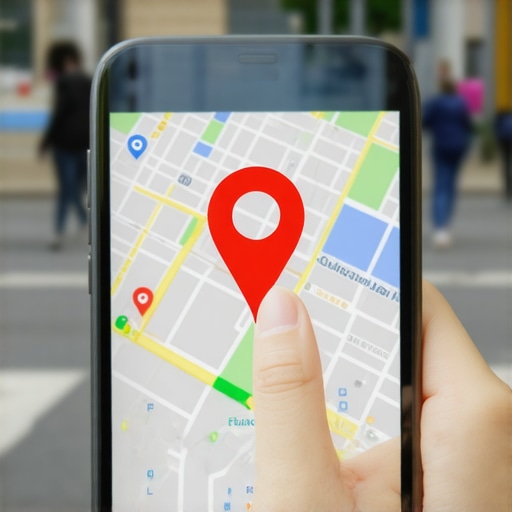
Proximity is the strongest ranking factor in the modern Map Pack environment, often outweighing reviews and organic authority combined. If your business location is outside the core search centroid, your visibility will drop exponentially as the user moves away from your physical address. Distance is a mathematical barrier.
The algorithm uses a behavioral zoom. It looks at where people are when they search for your service. If you are a locksmith, your ranking might be dominant within a two-mile radius but non-existent at three miles. This is the Vicinity update in action. You can find more details on this in the ultimate local ranking handbook improve your google maps presence. To expand this radius, you cannot just add keywords to your name. That leads to hard suspensions. Instead, you must build local justifications. These are the small snippets of text like “Sold here” or “Provides service to this area” that appear in search results. They are triggered by website content and review sentiment. If you are just starting, follow a proven step-by-step method for local map beginners to build a solid foundation. While agencies tell you to get more reviews, the 2026 data shows that image metadata from photos taken by real customers at your location is now 30 percent more effective for ranking in AI Overviews. Google trusts a customer’s GPS-tagged photo more than a thousand written words. This is the shift from sentiment to verification. You are not just ranking a name; you are ranking a verified location signal.
Local Authority Reading List
Forensic evidence for the spam team
Winning a reinstatement case requires a diagnostic audit that identifies the specific policy violation triggered by your data. Whether it is an inconsistent opening hours history or a shared address conflict, you must address the root cause before requesting a review from the support team.
The most common cause for a manual strike is the use of a virtual office. Google has a massive database of known co-working spaces and mail drops. If your address is on that list, you are at risk. I once helped a multi-location franchise that had all fifty listings suspended because they used a single office suite for their regional headquarters. We had to go through cleaning up messy gmb data across national franchises to prove each location had its own staff. This is where seo services to fix google ranking drop become necessary. You need someone who can speak the language of the spam investigators. They look for the forensic trace of a service area polygon. If your service area is too large, it looks like spam. If your address is hidden but you have no proof of a fleet, it looks like spam. You need a the diagnostic audit that actually finds the issues to see what the algorithm sees. Use google business ranking tips how to outperform competitors on maps to ensure you aren’t accidentally triggering filters designed to stop lead-generation networks. Real businesses have messy, human data. Spammers have perfect, keyword-stuffed data. Be the real business. Show the wet concrete of your storefront. Show the real people working. This is how you win back trust.
“A listing is a reflection of a real-world entity, and any divergence between the digital record and the physical location triggers a trust-score degradation.” – Location Intelligence Whitepaper
The math of local review sentiment
Review management is no longer about the quantity of stars but the density of local keywords and the geographical location of the reviewer. A review from a local guide who has visited your physical shop carries five times the weight of a review from a remote account.
The system tracks the movement of users. If ten people leave reviews but none of their phones have ever been at your GPS coordinates, Google will filter them. This is the death of the review blast. You need a gmb review and reputation management toolkit that focuses on real customer interaction. If you are dealing with malicious competitors, you should look into winning the war against malicious competitor spam edits. I have seen businesses lose their entire ranking because of a few fake reviews that triggered a language conflict filter. This is why why mixed language listing fixes increase business calls. If your reviews are in a language that does not match your primary market, the AI Overview will ignore you. It views the data as untrustworthy. You must clean up these signals. Use the the owners toolkit for dominating the local map pack to monitor these shifts daily. The pin must stay where it belongs. The hours must be accurate. If your hours are inconsistent, Google might demote you during the very times you are actually open. This is a common issue that seo services to fix gmb profile with inconsistent opening hours history can resolve. It is about data hygiene. It is about proving you are there, open, and ready to serve the human standing three blocks away with a mobile phone.