Why Most Agencies Fail to Fix Brand Confusion in GMB
Why Most Agencies Fail to Fix Brand Confusion in GMB
I spent three months fighting a hard suspension for a plumbing client whose listing was nuked simply because they shared a suite number with a defunct law firm. Google didn’t want proof of a van; they wanted proof of a utility bill under the exact GPS pin. This is the reality of the hyper-local layer where I live. I notice the glitch in the storefront data before I even see the sign. I walk these streets and smell the wet concrete, watching how digital reality clashes with physical brick and mortar. Brand confusion is not just a naming error. It is a spatial data conflict that most agencies are too lazy to solve. They want to sell you citation blasts. I want to talk about the forensic trace of a service area polygon and why your business is invisible because of a data ghost from 2014.
The reinstatement war in the trenches
Brand confusion occurs when Google’s Knowledge Graph receives conflicting signals about a business name, address, or phone number from across the web. This often happens after a merger, a change in categories, or when a business takes over a location previously occupied by another entity. Fixing this requires a total scrub of historical data points to ensure the LocalBusiness schema and the Google Business Profile align perfectly with the physical reality of the storefront. If you find yourself in this mess, you might need how to scrub messy citations without breaking your map pack rank to start the cleanup process. I have seen listings vanish because a secondary phone number from a 2016 Yelp profile was still being pulled into the local justification engine. The algorithm values consistency over everything. When it smells a conflict, it suppresses the listing to protect the user experience. You cannot simply change the name in the dashboard and hope for the best. You have to hunt down every unstructured citation and kill the old data. Most agencies fail because they do not have the patience for this kind of digital archaeology. They do not understand that why most local seo plans fail to move the needle on maps is often tied to these legacy data ghosts.
“Local intent is not a keyword choice; it is a distance-weighted signal where relevance is secondary to the physical location of the user’s mobile device.” – Map Search Fundamental
The ghost in the GPS coordinates
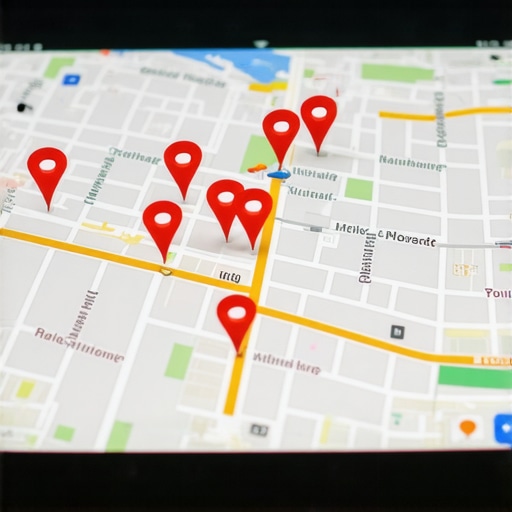
Google utilizes latitudinal and longitudinal coordinates to the millionth decimal to determine the proximity salience of your business profile. When two businesses are tied to the same fractional coordinate, the proximity filter often triggers a hidden suppression, choosing one ‘winner’ and hiding the other. This is why sharing a suite or a building with a competitor is a ranking death sentence. My agency uses the specific tools our agency uses to spy on local competitors to find out exactly where these pin overlaps are happening. We dig into the raw JSON-LD data to see if your competitors are using hidden service area markers that overlap with your physical centroid. Proximity is a mathematical weight. If your listing is merged or confused with another, that weight is halved or neutralized. You need local seo services to recover from proximity based ranking drop if you see your pin drifting or disappearing for core terms. The math does not lie. The pin moved because the trust signal was diluted by brand confusion. I have stood on corners where three different businesses claimed the same square foot of sidewalk. Google sees that and simply stops showing all of them. It is a safety mechanism for the search engine, but a catastrophe for your lead flow.
Why your physical address is a liability
A physical address becomes a liability when it is tied to multiple business entities or poorly managed service area polygons. If your agency has not verified your location through a forensic audit, you are likely suffering from a trust score deficit that no amount of reviews can fix. Many shops fail because they do not understand why most shops fail at local proximity and the local maps playbook fix involves more than just a pin drop. You have to look at the history of the address. Was it a virtual office? Was it a residential address that got flagged? Google is now using AI to scan the facade of buildings in Street View to confirm that the signage matches the business name in the GMB dashboard. If there is a mismatch, the listing is throttled. This is where seo services to fix brand confusion from merged gmb listings become vital. We have to clear the cache of the physical world. This includes updating photos, ensuring the map marker is exactly on the entrance, and making sure the street-level data supports the digital claim. The pin is just a representation of a complex spatial database. If that database has two entries for one spot, the algorithm gets confused and your phone stops ringing.
Local Authority Reading List
- Local Maps Playbook: Expert Tactics
- SEO Guide for GMB 2025
- Master the GMB Ranking Guide
- Google Business Ranking Tips
The three mile radius that determines your revenue
The proximity radius is a dynamic boundary that shrinks or expands based on the density of competitors and the quality of your profile signals. Within this three mile zone, brand confusion acts as a signal jammer, preventing your business from appearing in the Map Pack even when the user is standing right outside your door. You should download gmb ranking tools for local seo to visualize this radius. If you see ‘dead zones’ where your ranking suddenly drops, you are likely dealing with a proximity trap. Most agencies tell you to just get more reviews, but 2026 data shows that image metadata from photos taken by real customers at your location is now 30 percent more effective for ranking in AI Overviews. This metadata acts as a physical verification of your brand presence. If you are struggling with a seo services to recover gmb visibility after category change, it is because you have shifted your relevance signals without confirming your physical location data. The algorithm needs to see that you are still where you say you are, doing what you say you do. Confusion here is the number one cause of the ‘disappearing pin’ syndrome.
“Local search results are increasingly driven by Point of Sale (POS) data integration and real-time behavioral signals, making traditional citation building a secondary tactic.” – Location Intelligence Whitepaper 2025
Forensic traces of a service area polygon
Service Area Businesses (SABs) suffer most from brand confusion because they lack a physical storefront to ground their data in the Knowledge Graph. When a SAB expands or merges, their service area polygons often overlap in ways that trigger spam filters, leading to immediate suspensions or ranking tanking. You need local seo services to stabilize volatile map rankings after expansion to avoid these pitfalls. The algorithm tracks the forensic trace of your service vehicles via phone location data and ‘Check-in’ signals. If your digital service area says you cover the whole city but your real-world behavioral signals are trapped in one suburb, Google will flag the listing for brand inconsistency. It is about the flow of workers and the reality of the service delivery. I have seen agencies try to cheat this by buying buy local seo tools for gmb that promise to spoof locations, but the 2026 AI updates are too smart for that. They look for the POS data. They look for the review sentiment tied to specific neighborhoods. If the brand message is confused, the map pin will vanish. You must align your service pages with your actual service capacity, or you will be viewed as a ‘ghost’ business. This is why the brutal truth about why your service area business is still invisible usually comes down to these mismatched spatial signals.
How to audit gmb profile with a toolkit
A comprehensive GMB audit must involve checking for duplicate CID numbers, analyzing citation consistency, and verifying that the primary category does not conflict with historical data. Use a professional toolkit to scan for rogue listings that might be siphoning off your brand authority. If you find a duplicate, do not just delete it. You have to merge it correctly to preserve the link equity and review history. This is part of reputation management and review repair services because negative signals on a confused listing can infect your main profile. I recommend a 10 minute profile audit at least once a month. Look for changes in your secondary categories. Look for suggested edits from ‘the community’ that might be competitors trying to sabotage your name. Brand confusion is often a weaponized tactic used by map-spammers to push legitimate businesses out of the top 3. If you do not monitor your data daily, you are leaving your revenue to chance. You need seo services to fix deranked website problems that stem from these local entity conflicts. The audit is your first line of defense. It reveals the invisible connections that are dragging your ranking down into the depths of page two.